


Commercial truck accidents often happen because of driver negligence, mechanical failures, improperly loaded cargo, or violations of federal safety regulations. Common truck crashes include jackknife, rollover, underride, and rear-end accidents, many of which result in catastrophic injuries due to the size and weight of commercial vehicles. Understanding how these crashes occur can help victims protect their legal rights and pursue compensation after an accident.
Large commercial trucks are essential to the nation’s economy, but they also pose significant dangers on Illinois highways. A fully loaded tractor-trailer can weigh up to 80,000 pounds—more than 20 times the weight of a passenger vehicle. When truck drivers, trucking companies, or maintenance providers fail to follow safety standards, the consequences can be devastating.
Whether you’re involved in a collision with a semi-truck, tractor-trailer, box truck, or other commercial vehicle, understanding the different types of truck accidents and their causes is the first step toward determining liability.
Common Types of Truck Accidents
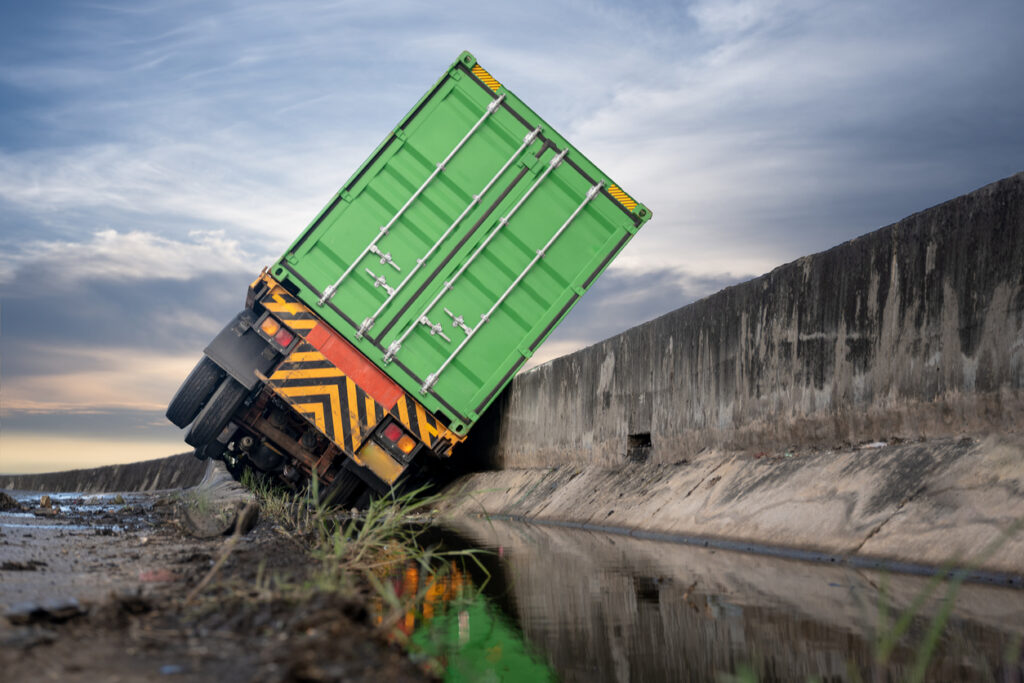
Jackknife Accidents
A jackknife accident occurs when the trailer swings outward, forming an angle with the cab that resembles a folding pocketknife.
These crashes commonly result from:
- Sudden braking
- Slippery roads
- Speeding
- Driver overcorrection
- Equipment failures
Jackknife accidents frequently block multiple lanes of traffic and often involve several vehicles.
Rollover Accidents
Truck rollovers occur when a commercial vehicle tips onto its side or roof.
Common causes include:
- Taking curves too quickly
- Uneven or shifting cargo
- Excessive speed
- Tire blowouts
- Driver error
Rollovers can crush nearby vehicles and create significant highway hazards.
Rear-End Truck Accidents
Because commercial trucks require much longer stopping distances than passenger vehicles, rear-end collisions are common.
These crashes may occur when:
- Drivers follow vehicles too closely
- Traffic suddenly slows
- Brakes malfunction
- Drivers are distracted or fatigued
Even low-speed rear-end collisions involving large trucks can cause severe injuries.
Head-On Collisions
Head-on truck accidents are among the deadliest roadway crashes.
They often result from:
- Driver fatigue
- Wrong-way driving
- Unsafe passing
- Distracted driving
- Impaired driving
The combined force of impact often leads to catastrophic or fatal injuries.
T-Bone Accidents
Also known as side-impact collisions, T-bone crashes occur when the front of one vehicle strikes the side of another.
These accidents commonly happen at:
- Intersections
- Highway crossings
- Loading entrances
- Construction zones
Failure to yield and running red lights are frequent contributing factors.
Underride Accidents
An underride accident happens when a smaller vehicle slides underneath the rear or side of a trailer.
These crashes often result in:
- Severe head injuries
- Neck injuries
- Fatal trauma
Although many trailers are equipped with underride guards, these devices cannot prevent every collision.
Override Accidents
Override accidents occur when a commercial truck drives over the rear of a smaller vehicle.
These crashes typically happen because of:
- Excessive speed
- Driver distraction
- Brake failure
- Poor visibility
The weight of a commercial truck often causes devastating damage to passenger vehicles.
Blind-Spot Accidents
Commercial trucks have significant blind spots on all four sides.
Accidents frequently occur when:
- Passenger vehicles remain beside the truck
- Truck drivers change lanes without seeing nearby vehicles
- Drivers fail to properly check mirrors
These crashes are especially common on busy expressways.
Wide-Turn Accidents
Large trucks require extra space to complete turns.
A wide-turn accident may happen when:
- A truck swings left before turning right
- Nearby vehicles attempt to pass
- Pedestrians or cyclists enter the truck’s path
Urban intersections are particularly hazardous.
Lost-Load Accidents
Improperly secured cargo may fall from a truck and create dangerous road hazards.
Examples include:
- Construction materials
- Lumber
- Steel beams
- Machinery
- Consumer goods
Cargo that falls onto the roadway can trigger chain-reaction collisions involving multiple vehicles.
Tire Blowout Accidents
Truck tires operate under tremendous pressure.
A blowout may result from:
- Poor maintenance
- Manufacturing defects
- Overloaded trucks
- Excessive heat
- Worn tires
A sudden tire failure can cause drivers to lose control of the vehicle.
Multi-Vehicle Pileups
Truck accidents often involve numerous vehicles because of the truck’s size and inability to stop quickly.
Pileups are common during:
- Heavy fog
- Snowstorms
- Heavy rain
- Interstate traffic congestion
These crashes frequently involve complicated questions of liability.
Common Causes of Truck Accidents

Driver Fatigue
Fatigue remains one of the leading causes of commercial truck accidents.
Although federal Hours-of-Service regulations limit driving time, violations still occur.
Sleep deprivation reduces:
- Reaction time
- Judgment
- Awareness
- Decision-making ability
Distracted Driving
Truck drivers face the same distractions as every other motorist.
Distractions include:
- Cell phones
- GPS devices
- Dispatch communications
- Eating
- Adjusting vehicle controls
Even a brief distraction can have devastating consequences.
Speeding
Commercial trucks require substantially longer stopping distances than passenger vehicles.
Excessive speed increases:
- Crash severity
- Rollover risk
- Stopping distance
- Tire stress
Aggressive Driving
Aggressive driving behaviors include:
- Tailgating
- Unsafe passing
- Road rage
- Sudden lane changes
These actions significantly increase the likelihood of collisions.
Improper Lane Changes
Commercial trucks have extensive blind spots.
Improper lane changes may occur when drivers fail to:
- Check mirrors
- Signal properly
- Monitor surrounding traffic
Following Too Closely
Because fully loaded trucks require hundreds of feet to stop, following too closely can quickly result in rear-end crashes.
Impaired Driving
Alcohol, illegal drugs, prescription medications, and even certain over-the-counter medications can impair a truck driver’s ability to safely operate a commercial vehicle.
Poor Truck Maintenance
Federal regulations require regular inspection and maintenance of commercial vehicles.
Neglecting maintenance can lead to:
- Tire failures
- Steering failures
- Lighting problems
- Suspension issues
Brake Failures
Brake defects are particularly dangerous because trucks rely on complex air brake systems.
Improper inspections or maintenance can lead to catastrophic crashes.
Tire Failures
Worn or defective tires increase the risk of:
- Blowouts
- Loss of steering control
- Rollovers
Overloaded Cargo
Exceeding weight limits affects:
- Braking
- Steering
- Stability
- Tire performance
Overloaded trucks are more difficult to control, especially during emergency maneuvers.
Improper Cargo Securement
Cargo must be properly balanced and secured.
Improper loading may cause:
- Cargo shifts
- Trailer instability
- Rollovers
- Lost-load accidents
Unqualified Drivers
Commercial drivers must meet licensing and qualification requirements.
Hiring inexperienced or unqualified drivers increases crash risk.
Inadequate Training
Truck drivers need training in:
- Defensive driving
- Cargo handling
- Emergency braking
- Adverse weather
- Vehicle inspections
Insufficient training contributes to preventable accidents.
Hours-of-Service Violations
Federal regulations limit how long truck drivers may remain behind the wheel.
Violating these rules increases fatigue-related crashes and may establish negligence in a personal injury claim.
Serious Injuries Commonly Seen in Truck Crashes
Because of the massive size difference between commercial trucks and passenger vehicles, victims often suffer catastrophic injuries.
Common injuries include:
Traumatic Brain Injuries
Head trauma may result in permanent cognitive impairment, memory loss, or disability. Victims with serious brain injuries should speak with an experienced Chicago brain injury lawyer about their legal options.
Spinal Cord Injuries
Damage to the spinal cord can cause chronic pain, paralysis, or permanent loss of mobility.
Internal Injuries
Internal bleeding and organ damage may not be immediately apparent but can become life-threatening without prompt medical treatment.
Amputations
Severe crush injuries may require surgical amputation, permanently affecting a victim’s quality of life and ability to work.
Burn Injuries
Truck accidents involving fuel spills or hazardous materials can result in severe burns requiring extensive medical treatment and reconstructive surgery.
Wrongful Death
Unfortunately, many truck accidents are fatal. Families who lose a loved one because of negligence may have the right to pursue a wrongful death claim.
Proving the Cause of a Truck Accident
Truck accident investigations are often more complex than passenger vehicle crashes because multiple parties may share responsibility.
Important evidence may include:
Black Box Data
Most commercial trucks contain electronic control modules that record information such as:
- Vehicle speed
- Braking activity
- Steering inputs
- Engine performance
Driver Logs
Electronic logging devices (ELDs) help determine whether drivers complied with Hours-of-Service regulations.
Maintenance Records
Inspection and repair records may reveal whether the trucking company failed to properly maintain the vehicle.
Inspection Reports
Federal and state inspection reports can identify prior safety violations or recurring mechanical issues.
Witness Statements
Statements from eyewitnesses, first responders, and accident reconstruction experts often help establish how the collision occurred.
Protecting Your Rights After a Truck Accident
Truck accident claims frequently involve trucking companies, insurance carriers, maintenance contractors, cargo loaders, and multiple corporate defendants. Preserving evidence and beginning an investigation as soon as possible can be critical to building a strong case.
If you were injured in a commercial truck crash, an experienced Chicago truck accident lawyer can investigate the accident, identify all liable parties, and pursue the compensation you deserve. Depending on the circumstances, your claim may also involve issues common to other car accident cases or broader personal injury claims. If the collision involved a pedestrian, our Chicago pedestrian accident lawyers can help evaluate your legal options.
To discuss your case with an attorney, contact Zayed Law Offices for a free consultation.