
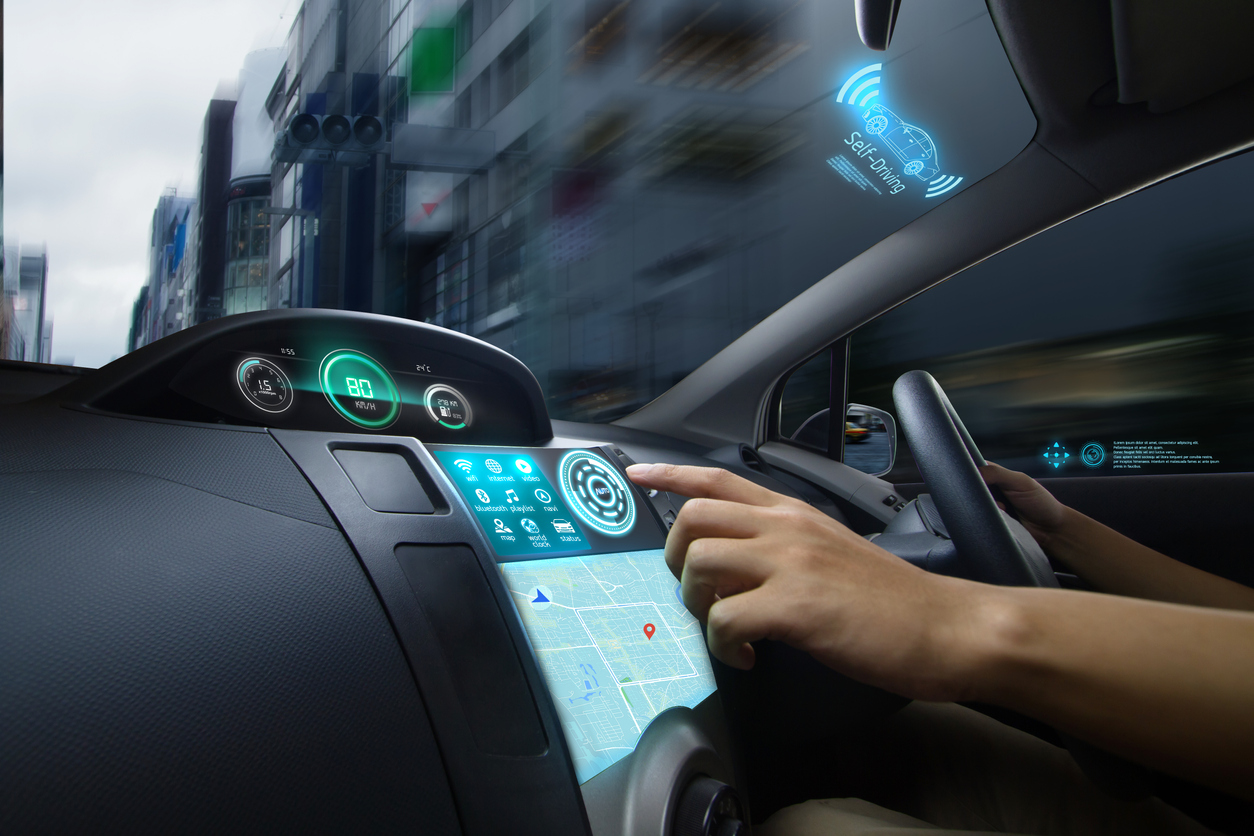
Self-driving cars have long been marketed as the future of transportation, promising safer roads, fewer accidents, and reduced human error. While the technology continues to evolve, the reality is more complex. Autonomous vehicles (AVs) are still in development, and growing evidence suggests they present unique risks that drivers, pedestrians, and lawmakers cannot ignore.
Technology Is Still Incomplete
Most cars on the road today rely on advanced driver assistance systems (ADAS), which still require constant human supervision.
This creates a dangerous gray area. Drivers may overestimate the capabilities of the technology, assuming the vehicle can handle situations it simply cannot. When human attention drops, accidents become more likely.
Increasing Safety Concerns on the Road
As self-driving technology becomes more common, so do concerns about how these vehicles perform in real-world situations. Reports of crashes involving autonomous systems have drawn attention to the gap between expectations and reality.
Many of these incidents occur because the technology struggles to respond appropriately to sudden or unpredictable conditions. Situations such as abrupt lane changes, unclear road markings, or unexpected pedestrian behavior can confuse even advanced systems. When this happens, the vehicle may react too slowly or incorrectly, leading to dangerous outcomes.
Another issue is that self-driving systems are often tested in controlled environments, where conditions are more predictable. Once these vehicles are introduced to busy streets with varied traffic patterns, construction zones, and human unpredictability, their limitations become more apparent.
Software and AI Limitations
Self-driving cars rely heavily on artificial intelligence to interpret their surroundings. However, AI does not “understand” the world the way humans do. Instead, it makes decisions based on patterns and data, leaving room for dangerous errors.
For example, systems may misidentify objects, misread traffic signs, or react unpredictably to unusual scenarios. In some cases, vehicles have even engaged in “phantom braking,” suddenly stopping without a clear reason, increasing the risk of rear-end collisions.
Difficulty Handling Complex Environments
Driving is not just about following rules, it requires judgment, anticipation, and adaptability. Human drivers can interpret subtle cues, such as eye contact with pedestrians or the behavior of other drivers.
Autonomous systems struggle in these gray areas. Research shows that self-driving vehicles may perform worse in certain conditions, such as low-light environments or when making turns, where accident risks can be significantly higher than with human drivers.
Urban environments, construction zones, and unpredictable weather conditions all present challenges that current technology has not fully mastered.
Overreliance and Driver Misuse
One of the most overlooked dangers is human behavior. Drivers often misuse self-driving features, treating them as fully autonomous when they are not.
When drivers disengage mentally or physically, they may not react quickly enough when the system fails. This false sense of security can be more dangerous than traditional driving.
Remote Intervention and System Failures
Many companies still rely on human intervention to assist self-driving systems. In some cases, remote operators can step in to guide or even control vehicles during complex situations.
However, this introduces new risks. Delays in communication, limited visibility, and technological glitches can all impact response times and decision-making.
Additionally, software bugs and system malfunctions remain a persistent concern. Recalls and investigations have revealed that even advanced systems can misjudge obstacles or fail to react appropriately.
Unclear Liability in Accidents
With self-driving vehicles, liability can become far more complicated than in traditional crashes.
Is the driver responsible for failing to intervene? Is the manufacturer at fault for a software error? What about third-party developers or remote operators?
This legal uncertainty can make it difficult for accident victims to recover compensation and hold the appropriate parties accountable. As the technology evolves, the legal system is still struggling to keep up.
Contact the Chicago Car Accident Lawyers at Zayed Law Offices Personal Injury Attorneys for a Free Consultation
While self-driving cars hold promise for the future, they are far from perfect, and in many ways, they introduce new risks rather than eliminating old ones. From software limitations to driver misuse and legal uncertainty, the dangers are real and evolving.
For individuals injured in accidents involving autonomous vehicles, understanding these risks is critical. If you or a loved one has been affected by a self-driving car accident, the experienced team at Zayed Law Offices Personal Injury Attorneys can help you navigate the complex legal landscape and pursue the compensation you deserve.
For more information, please contact the experienced Chicago car accident lawyers at Zayed Law Offices Personal Injury Attorneys today. We offer free consultations.
We proudly serve Cook County, Will County, Kendall County, and their surrounding areas:
Zayed Law Offices Personal Injury Attorneys – Chicago Office
10 S La Salle St STE 1230, Chicago, IL 60603
Phone:(312) 726-1616
Hours: Open 24/7
Our firm is located near you. We have an office in Chicago
Find us with our GeoCoordinates: 41.8816342, -87.6327395
Zayed Law Offices Personal Injury Attorneys – Joliet Office
195 Springfield Ave, Joliet, IL 60435
Phone: (815) 726-1616
Our firm is located near you. We have an office in Joliet
Find us with our GeoCoordinates: 41.5254295,-88.1381011
Zayed Law Offices Personal Injury Attorneys – Rockford Office
318 N 1st St, Rockford, IL 61107
Phone:(815) 662-0330
Hours: Open 24/7
Zayed Law Offices Personal Injury Attorneys – Wheaton Office
1761 S Naperville Road Suite 202, Wheaton, IL 60189
Phone: (630) 690-1919
Hours: Open 24/7